
Hydrogen & Ammonia Firing Solutions
INDUSTRY-LEADING DECARBONIZATION EQUIPMENT
Blazing a Path to Decarbonization
Successfully firing low- or no-carbon fuels requires more than changing the fuel supply. Hydrogen and ammonia each introduce unique considerations for flame characteristics, emissions, equipment design, monitoring, and combustion control.
Zeeco combines decades of combustion experience with innovative burner technology, advanced testing, modeling, controls, and field expertise to help customers evaluate and implement the right decarbonization solution for their operation.
From burner retrofits to new installations, and from pilots to monitoring and controls, Zeeco provides end-to-end combustion solutions for the evolving energy landscape.
Benefits & Challenges
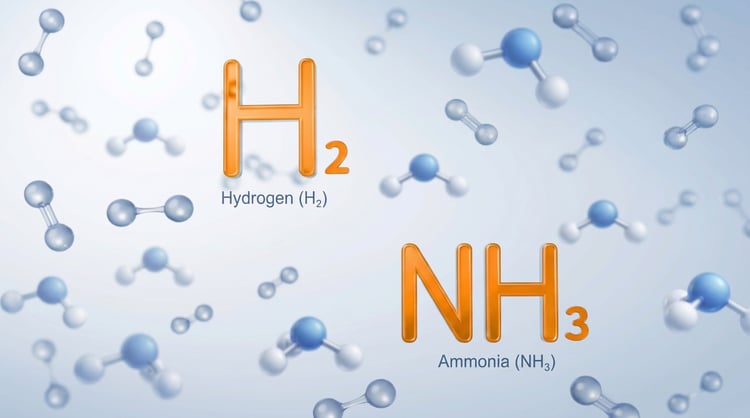
Hydrogen and ammonia offer promising pathways for reducing carbon emissions from industrial combustion. However, each fuel has unique characteristics that can impact combustion performance, emissions, equipment design, and operation. Understanding these differences is an important step in determining the right decarbonization strategy for your application.
Hydrogen
Benefits:
-
Zero carbon emissions when firing 100% H2
-
Can be fired at high concentrations or blended with conventional fuels
-
Often less fuel is needed to achieve the desired heating temperature
Challenges:
- Burner design compatibility
- Impact on boiler performance
- Upgrading instrumentation and controls
- Increased NOx emissions are possible
Ammonia
Benefits:
-
Carbon-free fuel at the point of combustion
-
Higher energy density and greater transportability compared with hydrogen
-
Existing transportation infrastructure, standards, and handling practices can support adoption in certain markets
Challenges:
-
Lower flame speed and narrower flammability range than conventional fuels
-
Flame stability and complete combustion require careful consideration
-
Fuel-bound nitrogen can contribute to NOx formation
-
Burner design and operating conditions must address ammonia slip and other emissions considerations
Transitioning Towards Decarbonization
Transitioning to hydrogen or ammonia firing requires evaluating how the new fuel will interact with the entire combustion system. Burner design, existing equipment, fuel delivery, ignition, flame monitoring, controls, emissions requirements, and operating conditions may all influence the appropriate solution.
Zeeco works with customers to evaluate existing equipment and operating requirements to determine the appropriate modifications or new equipment needed to support their decarbonization goals.
Ammonia & Hydrogen Process Burners
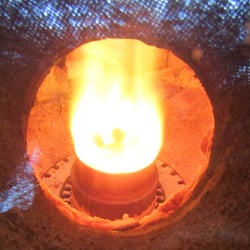
ZEECO GLSF FREE JET®
- Fuel-flexible design supports ammonia, hydrogen, natural gas, and fuel blends
- Stable flame demonstrated across high-ammonia fuel compositions
- Staged-fuel design supports reduced NOx when firing ammonia blends
- Developed for industrial heating and steam generation applications
- Supported by extensive combustion testing and CFD modeling
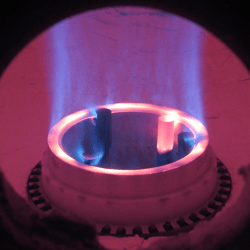
ZEECO FREE JET® Gen 2
- 25 years of proven industry experience in high-hydrogen operation
- Fires high-hydrogen and various fuel blends
- Uses internal flue gas recirculation for NOx reduction
- Stable and robust flame over a wider operating range
- Simple retrofit solution
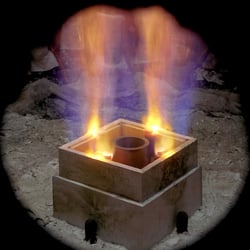
ZEECO FREE JET Gen 3
- Fires 100% hydrogen and various
fuel blends - Can combust flexicoker off-gas
- Forced and natural draft options
- Fits in nearly every furnace
- Near single-digit NOx emissions
when firing H2 - Single-digit NOx emissions when
firing natural gas - No complex controls
- No additional safety controls
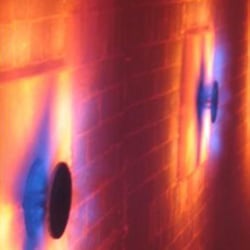
ZEECO Horizontal Slot Radiant Wall (HSRW) Burner
- Fires high hydrogen and various fuel blends
- Reduced CO2 and NOx emissions
- Simple maintenance
- Longer service life
Zeeco's Research into Hydrogen & Ammonia Firing Solutions
Advancements in Burner Technology
Recent advancements in hydrogen burner technology are enabling safe, stable combustion with ultra-low-NOx emissions while firing up to 100% hydrogen. Developed through collaboration between Zeeco and ExxonMobil, this next-generation burner design overcomes hydrogen’s unique flame characteristics and supports industrial decarbonization across refining, petrochemical, and energy applications.
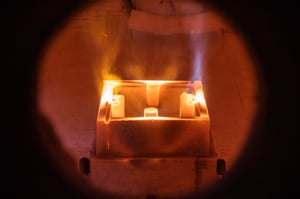
Hydrogen Ready
Hydrogen‑ready combustion solutions must address hydrogen’s unique flame characteristics while maintaining safe, stable operation. Zeeco’s burners, retrofit technologies, pilots, and flame scanners are designed to enable higher hydrogen firing rates with low NOx emissions, supporting a compliant transition to hydrogen firing in refining and petrochemical applications.
Industrial Ammonia Burner & Modeling Capability Development
Discover how Zeeco is helping advance ammonia as a viable fuel for industrial decarbonization. This research explores innovative burner technology, extensive testing, and advanced modeling to overcome the unique combustion and emissions challenges of ammonia firing.
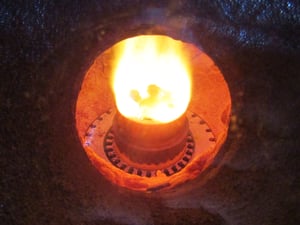
Industrial Ammonia Burner Development: Combustion Testing, Modeling, and Path to Prototype Readiness
Building on earlier ammonia combustion research, this paper explores continued development of the ZEECO FREE JET burner through forced-draft testing, advanced CFD modeling, and ammonia-hydrogen fuel-blend evaluation. The results demonstrate continued progress toward a commercially ready ammonia firing solution for industrial heating and steam generation applications.
Hydrogen Power Burners
Building on its proven success helping power plants transition from coal to gas and from oil to gas, Zeeco is well-positioned to support the next step in fuel evolution—hydrogen firing. With deep experience in burner design, retrofits, controls, and combustion safety, Zeeco enables power producers to adopt hydrogen fuels through a seamless, staged transition that maintains reliability, performance, and compliance. This proven approach helps power plants decarbonize with confidence while leveraging existing infrastructure wherever possible.
- Hydrogen-ready Ignition Systems: Zeeco ignition systems and pilots can be configured for hydrogen service, reducing or eliminating the need for additional fuel gases and ancillary equipment.
- Fuel Skids and Fuel Handling Systems: Zeeco can specify, design, and supply hydrogen fuel skids and fuel handling systems engineered for safe, controlled hydrogen delivery to the burner.
- Full Control System Integration for Hydrogen: Zeeco provides full control systems to manage hydrogen fuel addition, blending, and firing in coordination with burners, pilots, and safety systems.
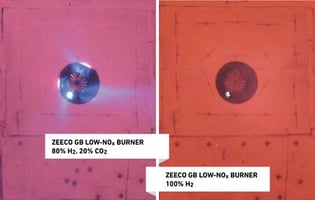
ZEECO GB low-NOx Burner
- Fires 100% H2 and a variety of fuel blends
- Highly reliable and field-proven technology
- Simple retrofit solution
- Minimal start-up time
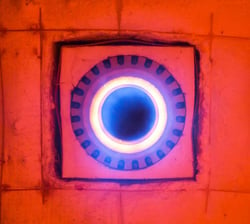
ZEECO FREE JET Gen 2
- 25 years of proven industry experience in high-hydrogen operation
- Fires high hydrogen and various fuel blends
- Uses internal flue gas recirculation for NOx reduction
- Stable and robust flame over a wider operating range
- Simple retrofit solution
ZEECO Flame Scanners
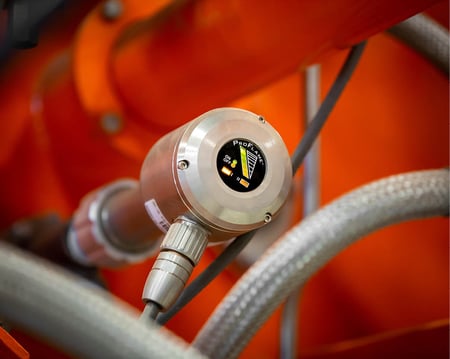
ZEECO ProFlame™
The ZEECO ProFlame scanner is one of the only flame scanners on the market capable of reliably detecting flames when firing high-hydrogen. Conventional flame scanners are configured to detect combustion radiation across the UV, visible, and IR spectra, providing a wide spectral range when firing various gas and liquid fuels. However, when firing high-hydrogen, the lack of carbon significantly narrows the spectral range and shifts it toward the UV. This results in weakened peak flame signals, leading to nuisance trips in conventional scanners. Because the ProFlame uses just the UV spectrum to detect flames, the absence of carbon does not affect its ability to detect combustion radiation from the target burner.
Related Resources
Enhanced Jet Flat Flame Burner - GLSF Series
The ZEECO® GLSF Enhanced Jet burner is an ultra-low emissions flat flame burner.
FREE JET® Next Gen Ultra-Low NOx Burner
The ZEECO® GLSF FREE JET® burner is a next-generation ultra-low emissions round flame burner.
Min-Emissions Round Flame Gas Burner
The ZEECO® GLSF Min-Emissions Burner is an ultra-low emissions round flame burner. Our design allows for a compact flame shape, making it a great choice for retrofit applications that require
Ethylene Technology
Our focus on the whole combustion process is what makes Zeeco a leader in retrofitting or equipping ethylene cracking furnaces with the latest low, ultra-low, and next generation emissions burner
Process and Boiler Burner Upgrades, Retrofits, & Controls
Upgrading your process heaters or boilers can dramatically improve plant safety, reduce NOx emissions, maximise plant efficiency, and enable easier fuel changes.
Tech Paper: Enhanced Jet Flat Flame Burners GLSF Series
Zeeco® offers the proven GLSF Enhanced Jet Flat Flame technology for ethylene cracking, coking, reforming and process heater-type applications that require a flat flame profile and low emissions.